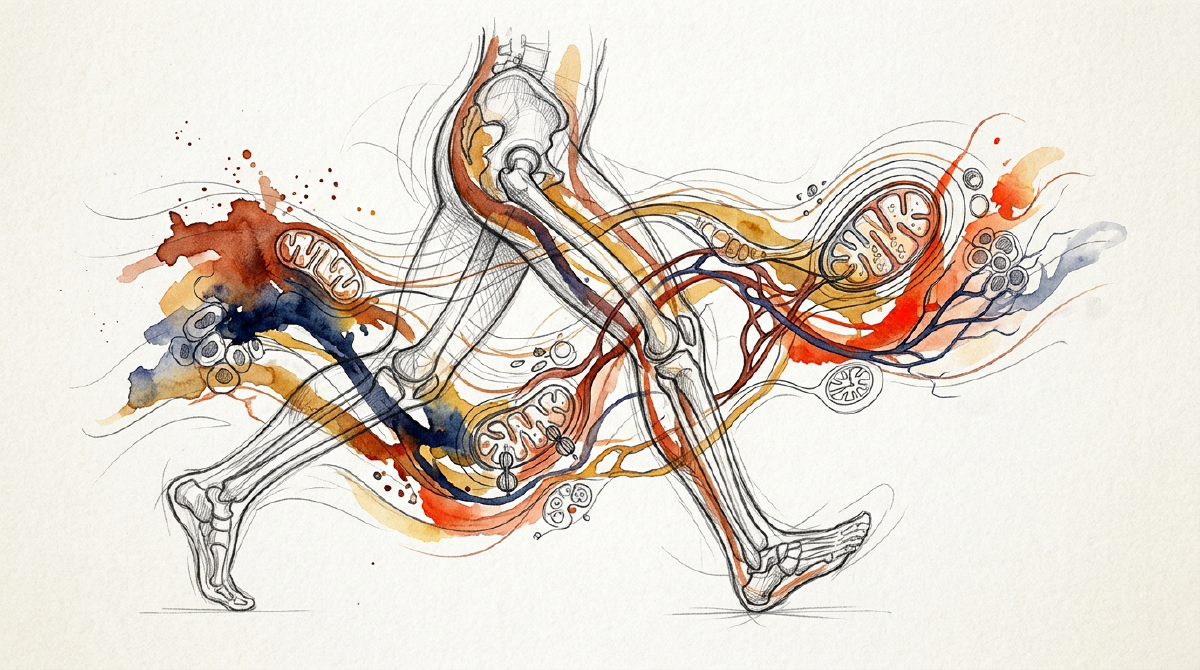
TL;DR: When human adults attempt to lose body fat, their default strategy is often high-intensity cardiovascular exercise (such as running). Gold-standard meta-analyses and doubly labeled water datasets (Careau & Pontzer 2021, Thorogood 2011, Paluch 2022, Saeidifard 2018, Ekelund 2019) reveal that isolated aerobic exercise produces shockingly modest fat loss (averaging less than 2 kg over 6 to 12 months). Vigorous cardio triggers two powerful counter-regulatory feedback loops: an energy compensation rate of 28% to 49% (where post-exercise fatigue causes humans to sit longer and suppress spontaneous movement) and an acute orexigenic surge (ghrelin elevation driven by rapid glycogen depletion). Conversely, Non-Exercise Activity Thermogenesis (NEAT) operates across all 112 waking hours of the week with near-zero recovery debt, keeping slow-twitch muscle lipoprotein lipase (LPL) active, stabilizing blood glucose, and creating an unassailable caloric expenditure floor.
When bipedal carbon units decide to reduce their accumulated adipose reserves, their default behavioural algorithm is nearly universal: purchase specialized synthetic footwear and subject their lower extremities to grueling, high-impact treadmill sessions. They believe that 45 minutes of acute physical agony will balance their daily thermodynamic ledger.
Evolutionary biology, however, is not so easily outmaneuvered.
Running is an exceptional physiological stimulus for developing left ventricular stroke volume, mitochondrial biogenesis, and maximal oxygen uptake (VO2 max). As an isolated weapon for fat loss, however, it is fundamentally misapplied.
Through the constrained total energy expenditure model and subconscious behavioral compensation, high-intensity running triggers internal feedback loops that neutralize the anticipated caloric deficit. Achieving sustainable fat loss requires shifting focus from acute 45-minute exercise bouts to the continuous metabolic engine operating across all 16 waking hours of the day: Non-Exercise Activity Thermogenesis (NEAT).
1. Macroscopic Physiology & The Systems Rationale #
This section provides a systems-level overview of physical energy expenditure for readers without formal training in biochemistry.
flowchart TD
    subgraph Arithmetic["The Weekly Energy Time Budget"]
        direction TB
        CardioTime["<b class='node-title'>Structured Cardio Window</b><span class='node-bullets'>• 45 minutes, 3x per week<br/>• Accounts for 2.25 hours (2% of waking week)<br/>• Generates high central nervous system fatigue</span>"]
        NEATTime["<b class='node-title'>NEAT Ambient Window</b><span class='node-bullets'>• 16 hours per day, 7 days per week<br/>• Accounts for 112 hours (98% of waking week)<br/>• Generates zero recovery debt or fatigue</span>"]
        CardioTime ~~~ NEATTime
    end
The Arithmetic of Time: 2.25 Hours vs. 112 Hours #
Consider the weekly time allocation of a typical fitness enthusiast:
- A dedicated runner might execute three 45-minute running sessions per week, totaling 2.25 hours of exercise.
- The human waking week consists of 16 hours per day across 7 days, totaling 112 waking hours.
Pouring all physical willpower into 2% of the weekly time budget while remaining completely sedentary for the remaining 98% represents an architectural design failure. A person who runs for 45 minutes but sits immobile for the remaining 15.25 hours of the day remains functionally sedentary.
The Post-Run Couch Collapse (Subconscious Energy Compensation) #
Cardiovascular exercise machines display flattering digital estimates of caloric expenditure: “450 kcal burned.” What the display fails to account for is the behavioral aftermath.
High-intensity running generates systemic central nervous system and muscular fatigue. Following an exhausting morning run, human physiology instinctively conserves energy for the remainder of the day. Without conscious realization, runners sit for longer durations, take elevators instead of stairs, avoid walking short distances, and cease subconscious fidgeting and postural adjustments.
This post-exercise couch collapse routinely erases 150 to 250 kcal of baseline spontaneous activity that would have otherwise occurred. The net daily caloric surplus created by the run is only a fraction of what the smartwatch recorded.
The Post-Cardio Muffin Trap (Appetite Dysregulation) #
High-intensity aerobic running relies heavily on intramuscular glycogen and hepatic glucose for rapid glycolytic flux.
When liver and muscle glycogen stores drop rapidly during a run, the brain interprets this acute glucose drop as an energetic emergency. It responds by releasing a surge of appetite-stimulating neuroendocrine signals (primarily ghrelin and neuropeptide Y), while suppressing the satiety hormone leptin.
The result is familiar to millions of runners: intense, ravenous post-workout hunger that leads to compensatory overeating. Ingesting a single post-workout pastry or sugary smoothie (400 to 600 kcal) immediately wipes out the entire caloric deficit produced by 5 miles of road work.
In contrast, low-intensity ambulation (walking, pacing, standing) relies almost exclusively on low-rate fatty acid beta-oxidation. It leaves liver glycogen intact, maintains stable blood glucose, and provokes zero compensatory hunger spikes.
The Active Couch Potato Phenomenon #
Human physiology did not evolve to withstand 10 continuous hours of physical immobility interrupted by a single 30-minute burst of running.
When postural skeletal muscles remain inactive for hours, specialized metabolic enzymes responsible for clearing fat and sugar from the bloodstream shut down. A 30-minute evening run cannot reverse the downstream vascular, enzymatic, and metabolic consequences of a 10-hour uninterrupted sitting session.
2. Under the Hood: The Constrained Energy Model & Neuroendocrine State Machines #
This section details the intracellular signaling, enzymatic kinetics, and mathematical expenditure models for clinicians and physiological specialists.
Total Daily Energy Expenditure (TDEE) is divided into four distinct physiological compartments:
$$\text{TDEE} = \text{BMR} (\sim 60\text{–}70\%) + \text{TEF} (\sim 10\%) + \text{EAT} (\sim 5\text{–}10\%) + \text{NEAT} (\sim 15\text{–}50\%)$$- Basal Metabolic Rate (BMR): The baseline energy required to sustain vital organ cellular function (brain, liver, kidneys, heart).
- Thermic Effect of Food (TEF): The obligatory cost of digesting, absorbing, and assimilating macronutrients (~10% of total intake).
- Exercise Activity Thermogenesis (EAT): The energy consumed during structured, intentional athletic bouts (running, cycling, sports).
- Non-Exercise Activity Thermogenesis (NEAT): The energy expended for everything that is not sleeping, eating, or structured sports exercise (walking, standing, typing, fidgeting, carrying loads, occupational movement, and maintaining postural muscle tone).
While BMR and TEF are relatively static, and EAT is strictly limited by fatigue and time, NEAT possesses an inter-individual variance of up to 2,000 kcal/day between humans of identical height and weight (Levine et al., 1999).
flowchart TD
    subgraph CardioTrap["The Cardio Compensation Cycle"]
        direction TB
        A["<b class='node-title'>Acute High-Intensity Cardio</b><span class='node-bullets'>• 45-Min Treadmill Run (~400 kcal)<br/>• Rapid Glycogen & ATP Depletion</span>"]
        B["<b class='node-title'>Central & Muscular Fatigue</b><span class='node-bullets'>• Elevated Systemic Cortisol<br/>• Motor Unit Exhaustion</span>"]
        C["<b class='node-title'>Subconscious NEAT Suppression</b><span class='node-bullets'>• Prolonged Sitting & Immobility<br/>• Erases 150–200 kcal of Baseline Burn</span>"]
        D["<b class='node-title'>Orexigenic Neuroendocrine Spike</b><span class='node-bullets'>• Elevated Ghrelin & NPY<br/>• Compensatory Post-Workout Hyperphagia</span>"]
        E["<b class='node-title'>Net Outcome: Zero Deficit</b><span class='node-bullets'>• Energy Balance Neutralized<br/>• Orthopedic Wear & High Friction</span>"]
        A --> B
        B --> C
        A --> D
        C --> E
        D --> E
    end
flowchart TD
subgraph NEATSuccess["The NEAT Metabolic Advantage"]
direction TB
F["<b class='node-title'>Distributed Low-Intensity Movement</b><span class='node-bullets'>• 8,000–10,000 Steps & Active Posture<br/>• Spread Across 16 Waking Hours</span>"]
G["<b class='node-title'>Lipid Beta-Oxidation Fueling</b><span class='node-bullets'>• Spares Glycogen Stores<br/>• Stable Blood Glucose & Insulin</span>"]
H["<b class='node-title'>Continuous LPL & GLUT4 Flux</b><span class='node-bullets'>• Postural Muscle Micro-Contractions<br/>• Active Triglyceride & Glucose Clearance</span>"]
I["<b class='node-title'>Zero Recovery Debt</b><span class='node-bullets'>• No CNS Fatigue or Cortisol Spike<br/>• Zero Compensatory Hunger Surges</span>"]
J["<b class='node-title'>Net Outcome: Massive Sustainable Deficit</b><span class='node-bullets'>• 300–500 kcal/day Passive Burn<br/>• Effortless Long-Term Adherence</span>"]
F --> G
G --> H
F --> I
H --> J
I --> J
endPontzer’s Constrained Energy Model vs. The Additive Fallacy #
Traditional exercise physiology relied on the naive Additive Model of Energy Expenditure, which assumed that every calorie burned during a run was linearly added on top of basal metabolism:
$$\text{TDEE}_{\text{Additive}} = \text{BMR} + \text{Activity Calories}$$Research utilizing the gold-standard Doubly Labeled Water (DLW) method across diverse global populations (Pontzer et al., 2016; Careau et al., 2021) demonstrated that human metabolism operates under a Constrained Energy Model:
$$\text{TDEE}_{\text{Constrained}} = f(\text{Activity}) \quad \text{with dynamic internal energy trade-offs}$$When energy expenditure through vigorous exercise escalates, the body dynamically downregulates other energy-consuming physiological systems to conserve total fuel:
- It suppresses resting somatic cell repair and reproductive hormone signaling (lowering testosterone and estrogen pulsatility).
- It downregulates baseline immune inflammation.
- Most notably, it suppresses spontaneous motor tone and NEAT.
Because running pushes total activity into the non-linear portion of the constrained expenditure curve, the net energy gain yields diminishing returns.
Hypothalamic Neurobiology of Posture Allocation #
Spontaneous physical activity is not a conscious choice of willpower; it is governed centrally by neurochemical circuits in the lateral hypothalamus (LH) and paraventricular nucleus (PVN).
- Orexin-A (Hypocretin-1): Synthesized exclusively in the lateral hypothalamus, orexin-A projects directly to the locus coeruleus and ventral tegmental area (VTA), regulating wakefulness, spontaneous locomotion, and posture allocation. High orexin tone drives spontaneous standing, pacing, and subconscious muscle tension.
- Leptin Interaction: Adipocyte-derived leptin crosses the blood-brain barrier to stimulate LH orexin neurons. When an individual enters a caloric deficit and loses fat, circulating leptin drops rapidly.
- The Conservation Reflex: Reduced leptin input directly suppresses orexin-A and downregulates striatal dopamine D2 receptor signaling. The brain automatically commands the musculoskeletal system to cease all non-essential movement, inducing heavy limb sensations and prolonged sitting.
Running accelerates this hypothalamic conservation response by acutely depleting energy stores, whereas low-intensity walking minimizes leptin-orexin downregulation.
Lipoprotein Lipase (LPL) Kinetics in Postural Fibers #
The metabolic superiority of NEAT is rooted in the unique biophysics of slow-twitch, Type I skeletal muscle fibers (specifically the soleus and gastrocnemius).
Slow-twitch postural fibers are packed with mitochondria and rely on Lipoprotein Lipase (LPL), an endothelium-bound enzyme that hydrolyzes circulating plasma triglycerides into free fatty acids for cellular oxidation.
- Sitting Immobility: In rodent and human microdialysis models (Hamilton et al., 2007), physical sitting causes electromyographic (EMG) silence in postural leg muscles. Within 4 hours of sitting, muscular LPL activity plummets by over 90%, and local glucose uptake drops by 75%. Circulating lipids are redirected away from muscle oxidation and deposited into visceral adipose tissue.
- Low-Intensity Micro-Contractions: Low-intensity standing, pacing, and slow walking produce continuous, low-amplitude EMG activity. This tonic contraction maintains local LPL mRNA transcription and keeps GLUT4 glucose transporters active on the sarcolemma, clearing lipids and glucose from the bloodstream all day long without generating lactate or cellular fatigue.
3. The Empirical Evidence: Gold-Standard Meta-Analyses #
The biological mechanisms governing energy compensation and NEAT are confirmed by extensive clinical datasets and meta-analyses:
| Meta-Analysis / Landmark Study | Dataset & Sample Size | Primary Findings & Metrics | Prescriptive Conclusion |
|---|---|---|---|
| Careau, Halsey, Pontzer et al. (2021) Curr Biol PMID: 34453886 |
1,754 adults (IAEA Doubly Labeled Water database) | Proved an average 28% energy compensation rate across humans, rising to ~49% in individuals with high adiposity. | Up to half of the calories burned in vigorous workouts are cancelled out by involuntary drops in NEAT and basal expenditure. |
| Thorogood et al. (2011) Am J Med PMID: 21868369 |
14 RCTs in adults undergoing isolated aerobic exercise | Isolated aerobic training (running/cycling without dietary intervention) produced minimal weight loss (<1.5 to 2.0 kg over 6 to 12 months). | Highlighting the severe disconnect between theoretical calorie burn and real-world weight loss outcomes from cardio. |
| Paluch et al. (2022) Lancet Public Health PMID: 35247352 |
15 prospective cohorts n = 47,471 adults (device accelerometry) |
Non-linear inverse dose-response between daily steps and all-cause mortality, plateauing at 6,000–8,000 steps/day (≥60 yrs) and 8,000–10,000 steps/day (<60 yrs). | Incremental low-intensity stepping accounts for the dominant fraction of lifestyle risk reduction and metabolic flux. |
| Saeidifard et al. (2018) Eur J Prev Cardiol PMID: 29385311 |
46 studies n = 1,184 adults |
Standing increases energy expenditure by +0.15 kcal/min (+9.0 kcal/hr) over sitting (95% CI: 0.12 to 0.17 kcal/min). | Replacing 6 hours of daily sitting with standing yields an extra ~54 to 90 kcal/day, accumulating to ~2.5 kg of body fat mass loss per year. |
| Ekelund et al. (2019) BMJ PMID: 31434697 |
8 prospective studies n = 36,383 adults (harmonized accelerometry) |
Light physical activity (1.5 to 2.9 METs, encompassing NEAT) significantly reduces mortality; sedentary time ≥9.5 hours/day steeply escalates hazard ratios. | Breaking up prolonged sedentary bouts with incidental movement is an independent metabolic imperative. |
| Levine, Eberhardt, & Jensen (1999) Science PMID: 9880251 |
Controlled 1,000 kcal/day overfeeding study (n = 16) | NEAT accounted for a 10-fold difference in fat storage resistance between individuals (ranging from +0 to +692 kcal/day of spontaneous dissipation). | Spontaneous physical movement is the primary physiological determinant of fat gain resistance in humans. |
4. Prescriptive Protocols & Concrete Operational Guidelines #
Transforming these metabolic insights into an actionable physical protocol requires establishing an ambient movement infrastructure while assigning each exercise modality to its proper physiological role.
flowchart TD
    subgraph Protocol["The Complete Physical Architecture for Fat Loss"]
        direction TB
        P1["<b class='node-title'>1. The NEAT Foundation (Daily Baseline)</b><span class='node-bullets'>• 8,000 to 10,000 steps/day via walking & active workstations<br/>• Drives 300–500 kcal/day of frictionless caloric expenditure</span>"]
        P2["<b class='node-title'>2. Progressive Resistance Training (2–4x/week)</b><span class='node-bullets'>• Mechanical tension & muscle mass preservation<br/>• Prevents loss of the primary glycemic sink during deficit</span>"]
        P3["<b class='node-title'>3. Targeted Cardio / Conditioning (1–2x/week, Optional)</b><span class='node-bullets'>• Dedicated strictly to VO2 max & cardiac output<br/>• Decoupled entirely from caloric expenditure goals</span>"]
        P1 --> P2
        P2 --> P3
    end
1. Establishing an Unbreakable Step-Floor (8,000 to 10,000 Steps) #
Instead of scheduling grueling cardio sessions, engineer your daily routine around a non-negotiable step floor:
- Target: 8,000 to 10,000 steps per day (monitored passively via wrist or smartphone accelerometry).
- Execution: Break stepping volume into friction-free micro-bouts:
- A 15-minute morning walk (~1,800 steps).
- Taking phone calls and team check-ins while pacing (~2,000 steps).
- Choosing distant parking spaces and taking stairs (~1,500 steps).
- A 20-minute evening walk (~2,500 steps).
- The Advantage: This protocol generates an extra 350 to 450 kcal/day of expenditure without triggering central nervous system fatigue or compensatory hunger.
2. Active Workstation Engineering (Under-Desk Walking Pads) #
For desk-bound professionals, relying on leisure-time walking alone is often insufficient:
- Install an under-desk flat treadmill (walking pad) paired with a height-adjustable standing desk.
- Set the velocity to 1.5 to 2.2 km/h (0.9 to 1.3 mph).
- The Energetics: Walking at 1.8 km/h consumes approximately 100 to 130 kcal/hour above resting baseline.
- At this low velocity, heart rate remains below 90 bpm, the sweat response is not triggered, typing accuracy remains unimpaired, and 90 minutes of walking during emails burns ~180 kcal effortlessly.
3. Postprandial Glucose Shunts (The 10-Minute Walk Rule) #
Execute a low-intensity 10-minute walk immediately following your two largest carbohydrate-containing meals of the day:
- Postprandial ambulation contracts soleus and quadriceps muscle groups, stimulating GLUT4 translocation independently of insulin.
- This blunts post-meal glucose and insulin spikes by up to 30%, suppressing subsequent reactive hypoglycemia and preventing downstream energy crashes.
4. Repositioning Physical Training Modalities #
To optimize body composition and long-term health, assign each training modality strictly to its intended biological purpose:
- NEAT / Walking (Daily Baseline): The primary tool for caloric expenditure, metabolic flux, and soleus LPL activation.
- Resistance Training (2 to 4 sessions/week): The primary tool for mechanical tension, myofibrillar protein synthesis, and preserving skeletal muscle mass during a deficit (paired with 1.6 to 2.2 g/kg/day protein).
- Running / High-Intensity Cardio (1 to 2 sessions/week, Optional): Reserved strictly for cardiovascular resilience, left ventricular remodeling, and VO2 max development. Never run to “burn off” a meal.
5. Practical Implementation Matrix #
| Physical Lever | Operational Protocol | Primary Physiological Target |
|---|---|---|
| Daily Step Floor | 8,000 to 10,000 steps/day tracked via passive accelerometer | Sustained baseline NEAT; prevents the 28–49% energy compensation trap. |
| Active Workstation | 60 to 90 minutes of under-desk walking (1.5–2.0 km/h) | Continuous slow-twitch soleus LPL activation; +150–200 kcal daily burn. |
| Post-Meal Walks | 10 minutes of light walking immediately following main meals | Insulin-independent GLUT4 glucose uptake; blunts postprandial glucose peaks. |
| Resistance Training | 2 to 4 weekly sessions focused on progressive overload | Preserves the body’s primary glycemic sink (70–80% glucose disposal). |
| Dietary Protein | 1.6 to 2.2 g/kg total weight (or 2.3 to 3.1 g/kg FFM) | Intracellular leucine override of the AMPK brake; halts proteolysis. |
Epilogue: The Irony of Modern Locomotion #
There is a distinct cosmic comedy in human technological development.
Human civilization expended centuries of engineering genius inventing internal combustion engines, escalators, elevators, and automated transport to eradicate physical exertion from daily survival. Having successfully engineered movement out of existence, humans found their biology rebelling: lipid profiles degraded, insulin resistance surged, and adipose stores accumulated.
To solve this manufactured crisis, modern humans constructed indoor facilities filled with motorized rubber belts, paying monthly subscriptions to run in place while staring at television screens in air-conditioned rooms.
The empirical literature makes the biological reality clear: human physiology does not demand acute, self-punishing bouts of treadmill exhaustion to maintain metabolic health. It requires continuous, distributed, low-intensity ambient movement. By reclaiming the simple acts of walking, standing, and moving throughout the day, biological humans can effortlessly outmaneuver their own evolutionary energy traps.
Key Research & Systematic Reviews #
- Careau, V., Halsey, L. G., Pontzer, H., et al. (2021). Energy compensation and adiposity in humans. Current Biology, 31(21), 4659–4666. DOI: 10.1016/j.cub.2021.08.016 | PMID: 34453886
- Thorogood, A., et al. (2011). Isolated aerobic exercise and weight loss: a systematic review and meta-analysis of randomized controlled trials. The American Journal of Medicine, 124(8), 747–755. DOI: 10.1016/j.amjmed.2011.02.037 | PMID: 21868369
- Paluch, A. E., et al. (2022). Daily steps and all-cause mortality: a meta-analysis of 15 international cohorts. The Lancet Public Health, 7(3), e219–e228. DOI: 10.1016/S2468-2667(21)00302-9 | PMID: 35247352
- Saeidifard, F., et al. (2018). Differences of energy expenditure while sitting versus standing: A systematic review and meta-analysis. European Journal of Preventive Cardiology, 25(5), 522–538. DOI: 10.1177/2047487317752186 | PMID: 29385311
- Ekelund, U., et al. (2019). Dose-response associations between accelerometry measured physical activity and sedentary time and all cause mortality: systematic review and harmonised meta-analysis. The BMJ, 366, l4570. DOI: 10.1136/bmj.l4570 | PMID: 31434697
- Levine, J. A., Eberhardt, N. L., & Jensen, M. D. (1999). Role of nonexercise activity thermogenesis in resistance to fat gain in humans. Science, 283(5399), 212–214. DOI: 10.1126/science.283.5399.212 | PMID: 9880251
- Levine, J. A., et al. (2005). Interindividual variation in posture allocation: possible role in human obesity. Science, 307(5709), 584–586. DOI: 10.1126/science.1106561 | PMID: 15681386